
Belen Martinez
Sheffield Hallam University
Think about the last time you took a taxi or an Uber. Was the driver a man or a woman? Chances are, it was a man. This is because transport remains one of the most male-dominated sectors in cities. In Spain, for example, approximately 5% of taxi drivers are women. Yet in Malaga, where I carried out ten months of fieldwork, women are increasingly entering this world. By travelling with them, interviewing them, and listening to their stories, I begin to see that driving is not just about moving people from A to B. It is about how cities, technologies, and everyday work are quietly organised around men’s lives and bodies. This question matters to me personally. I have long been interested in women who enter jobs widely seen as ‘men’s work’. Listening to these drivers describe the daily effort it takes to claim space in a male-dominated sector made me curious about what we miss when their experiences are overlooked.
Same ride, different working conditions
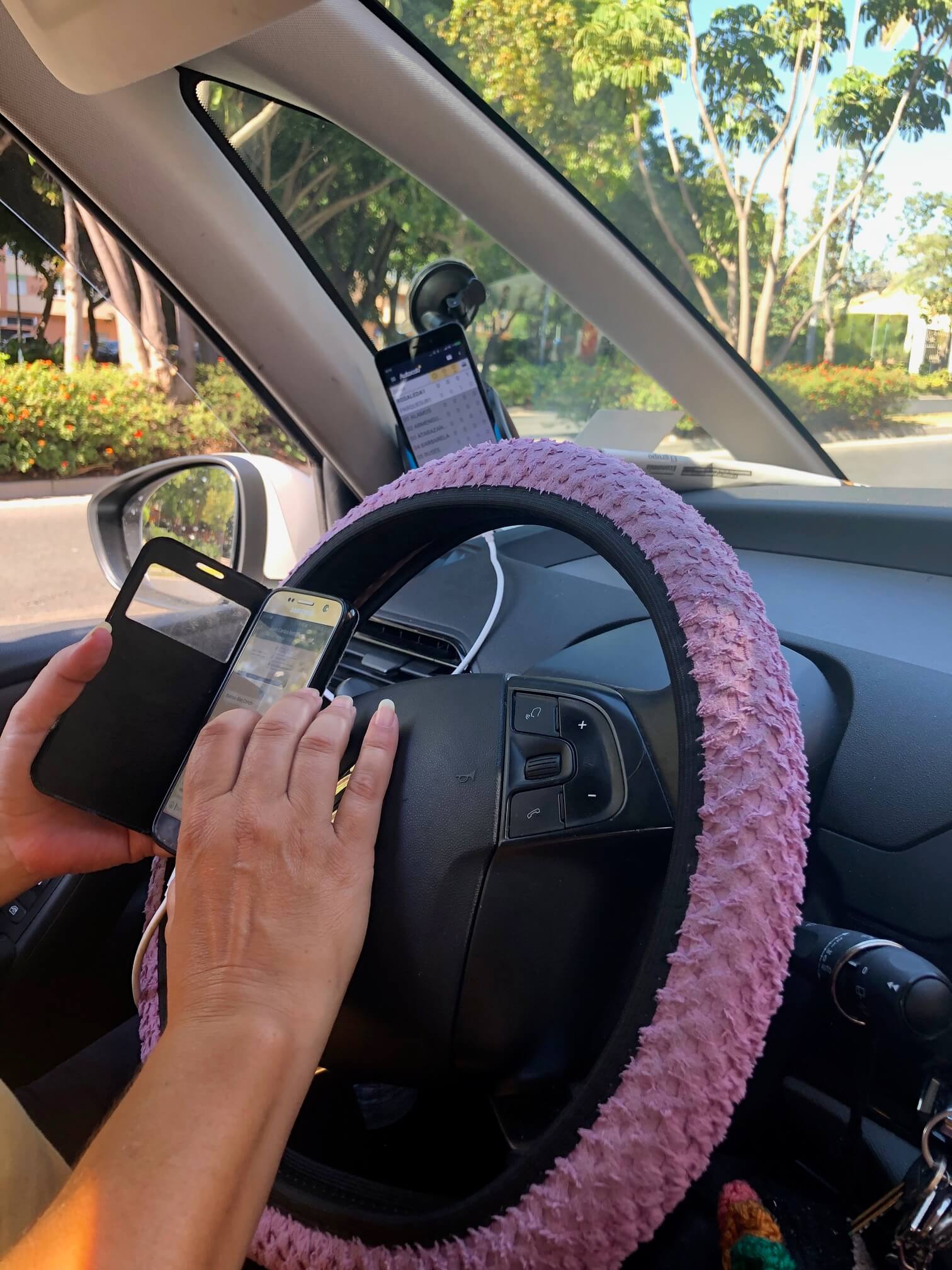
To a passenger, a ride in a taxi and a ride booked through an app may feel almost the same. But for the women driving, the conditions under which they work can be radically different. Some are traditional taxi drivers who own their cars and licences. Others work for platforms like Uber or Cabify, employed by fleet companies and managed by apps and algorithms.
Platform work is often advertised as flexible and empowering, especially for women. In reality, schedules are fixed, movements tracked, and breaks controlled by the app or the company, making it difficult to ‘log on and off’. The flexibility that is so often promised rarely matches the reality of their everyday lives.
Safety as a daily calculation
But beyond contracts and technology, what really reveals the job’s gendered nature is the city itself. For these women, safety is a constant calculation. Many avoid night shifts, even though they tend to be the most profitable. Those who do work at night often end up looking out for others: waiting until a passenger is safely inside their building, offering advice, or simply providing a reassuring presence. By working on the streets at night, these women are both exposed to gendered violence and performing an invisible form of care that helps other women feel safer.
The ‘drama of going to the toilet’
And then there is the issue that every single one of my participants raised, without exception: what one of them calls ‘the drama of going to the toilet’. When your workplace is the street, a basic bodily need becomes a daily challenge. Finding a clean, safe, accessible toilet takes time and planning. It often means negotiating with restaurant staff, building friendly relationships with café owners, or knowing exactly which petrol stations will let you in without asking questions. While men can usually relieve themselves quickly and discreetly in public spaces, women cannot.
The consequences include lost time, money spent to gain access, health problems from not drinking enough water, and the added pressures of menstruation. This is not just a minor inconvenience. It reveals how urban infrastructure is built around male bodies and male patterns of work.
Strategies for staying on the road
Faced with these conditions, women do not simply give up. My research shows how they develop strategies – small, everyday acts of adaptation and resistance. Some are about survival: drinking less, planning routes around known toilets, avoiding certain areas, and learning to laugh off inappropriate comments from customers so the day can continue. Others are about reclaiming a bit of control: switching off the app to take a break, reorganising shifts around school hours, creating mental maps of ‘safe places’ in the city. A few challenge norms more openly, refusing to behave in conventionally ‘ladylike’ ways, using harsh language, or even entering men’s toilets when the women’s queue is too long.
These practices show that women are not passive victims. They are active agents, constantly negotiating their working conditions. This agency, however, comes at a price. It is paid in time lost searching for a safe toilet instead of taking fares; in health problems caused by not drinking enough water; in income lost by avoiding night shifts; and in the emotional work of staying alert and calm in unsafe situations.
Confidence and its limits
Driving also reshapes how these women see themselves. Many describe feeling more confident, more capable, less afraid of strangers, and more at home in the city. Yet this sense of empowerment has limits. At home, most still carry the primary responsibility for childcare and domestic work. For some, flexible schedules help them ‘make things work’, but often at the price of exhaustion. The city may recognise them as professional drivers, but society still expects them to be primary carers.
Why this matters for our cities
Because who gets to move, work, and feel safe in the city is shaped by social structures, not just individual choice. Women drivers are not simply entering an existing labour market; their presence highlights how transport work, urban design, and digital platforms have been organised around men’s bodies, schedules, and life patterns. By working in this sector, they question the assumption that technical skill, night work, and constant mobility are naturally male domains. At the same time, their experiences make visible how gender is embedded in everyday infrastructures and policies – from the availability of public toilets, to safety systems in apps, to working hours and childcare arrangements.
If we want to see more women working in urban transport, individual resilience is not enough. Practical changes are needed: better access to public toilets, safety features on platforms that provide drivers with real-time information and control, and serious responses to harassment and violence. More broadly, care responsibilities also need to be more evenly shared, so that ‘flexible’ work does not simply mean that women carry the burden of adapting.
So next time you take a taxi or book a ride, it may be worth noticing who is behind the wheel. If it is a woman, remember that her presence there is not just about learning the fastest route. It is about navigating a city, a job, and social rules that were never designed with her in mind – and quietly helping to change them.
(ESP)
Al volante: lecciones de mujeres taxistas y conductoras de Uber
Belen Martinez
Sheffield Hallam University
Piensa en la última vez que cogiste un taxi o un Uber. ¿El conductor era un hombre o una mujer? Lo más probable es que fuera un hombre. Esto es porque el transporte sigue siendo uno de los sectores más masculinizados de nuestras ciudades. En España, por ejemplo, aproximadamente el 5% de las personas que conducen un taxi son mujeres. Sin embargo, en Málaga, donde realicé diez meses de trabajo de campo, cada vez más mujeres están entrando en este mundo. Al viajar con ellas, entrevistarlas y escuchar sus historias, empiezo a ver que conducir no consiste solo en llevar a alguien del punto A al punto B. Tiene que ver con cómo las ciudades, las tecnologías y el trabajo cotidiano están organizados en torno a las vidas y los cuerpos de los hombres. Esta pregunta también es importante para mí a nivel personal. Desde hace años estoy interesada en mujeres que se incorporan a profesiones consideradas tradicionalmente “trabajos de hombres”. Escuchar a estas conductoras describir el esfuerzo diario que supone hacerse un hueco en un sector dominado por hombres me hizo preguntarme qué estamos ignorando cuando no prestamos atención a sus experiencias.
Mismo trayecto, condiciones distintas
Para quien va como pasajero, un viaje en taxi y uno reservado a través de una aplicación pueden parecer casi lo mismo. Pero para las mujeres que conducen, las condiciones de trabajo pueden ser muy diferentes. Algunas son taxistas tradicionales que poseen su propio vehículo y su licencia. Otras trabajan para plataformas como Uber o Cabify, contratadas por empresas intermediarias y gestionadas a través de aplicaciones y algoritmos.
El trabajo en plataformas suele presentarse como flexible y empoderador, especialmente para las mujeres. Pero en la práctica, los horarios están fijados, los movimientos se supervisan y las pausas se controlan desde la aplicación o la empresa, lo que dificulta simplemente “conectarse y desconectarse” cuando se necesita. La flexibilidad prometida rara vez coincide con la realidad de su día a día.
La seguridad como cálculo constante
Pero más allá de los contratos y la tecnología, lo que realmente revela el sesgo por género en este trabajo es la propia ciudad. Para estas mujeres, la seguridad es un cálculo constante. Muchas evitan los turnos de noche, aunque suelen ser los más rentables. Las que sí trabajan de noche, a menudo acaban preocupándose también por otras: esperan a que la pasajera entre en su portal, ofrecen consejos o simplemente proporcionan una presencia tranquilizadora. Al estar en la calle de noche, estas mujeres están expuestas a la violencia de género y, al mismo tiempo, realizan una forma invisible de cuidado que ayuda a otras mujeres a sentirse más seguras.
El “drama de ir al baño”
Y luego está el tema que todas mis participantes mencionaron, sin excepción: lo que una de ellas llamó “el drama de ir al baño”. Cuando tu lugar de trabajo es la calle, una necesidad básica se convierte en un desafío diario. Encontrar un baño limpio, seguro y accesible requiere tiempo y planificación. A menudo implica negociar con el personal de bares y restaurantes o saber exactamente en qué gasolineras te dejarán entrar sin hacer preguntas. Mientras que los hombres pueden aliviarse con rapidez y discreción en el espacio público, las mujeres no.
Las consecuencias son claras: tiempo perdido, dinero gastado para poder acceder a un baño, problemas de salud por beber menos agua y las dificultades añadidas durante la menstruación. No se trata de una simple incomodidad. Es una muestra de cómo la infraestructura urbana se ha diseñado pensando en cuerpos y rutinas masculinas.
Estrategias para seguir en la carretera
Ante estas condiciones, las mujeres no se rinden. Mi investigación muestra cómo desarrollan estrategias: pequeños gestos cotidianos de adaptación y resistencia. Algunas tienen que ver con la supervivencia: beber menos agua, planificar rutas en función de baños conocidos, evitar determinadas zonas o aprender a quitar importancia a comentarios inapropiados para poder continuar la jornada.
Otras buscan recuperar cierto control: apagar la aplicación para hacer una pausa, reorganizar los turnos según los horarios escolares o crear mapas mentales de “lugares seguros” en la ciudad. Algunas incluso desafían las normas de forma más directa, negándose a comportarse de manera “femenina” según los estereotipos, utilizando un lenguaje más duro o entrando en el baño de hombres cuando la cola del de mujeres es demasiado larga.
Estas prácticas muestran que las mujeres no son víctimas pasivas. Son agentes activas que negocian constantemente sus condiciones de trabajo. Sin embargo, esa capacidad de adaptación tiene un coste: se paga en tiempo perdido buscando un baño, en problemas de salud por no beber suficiente agua, en ingresos que se dejan de ganar al evitar ciertos turnos y en el esfuerzo emocional de mantenerse alerta y tranquila en situaciones que pueden resultar inseguras.
Confianza… y sus límites
Conducir también transforma la forma en que estas mujeres se ven a sí mismas. Muchas describen que se sienten más seguras, más capaces, menos temerosas ante personas desconocidas y más dueñas de la ciudad. Sin embargo, este empoderamiento tiene límites. En casa, la mayoría sigue asumiendo la responsabilidad principal del cuidado de menores y de las tareas domésticas. Para algunas, los horarios flexibles ayudan a organizarse, pero a menudo a costa del cansancio. La ciudad puede reconocerlas como conductoras profesionales, pero la sociedad sigue esperando que sean las principales cuidadoras.
Por qué esto importa para nuestras ciudades
Quién puede moverse, trabajar y sentirse seguro en la ciudad no depende solo de decisiones individuales, sino de estructuras sociales. Las mujeres conductoras no solo están entrando en un mercado laboral ya existente; su presencia pone de relieve cómo el trabajo en el transporte, el diseño urbano y las plataformas digitales se han organizado históricamente en torno a los cuerpos, horarios y trayectorias de los hombres.
Al trabajar en este sector, cuestionan la idea de que la habilidad técnica, el trabajo nocturno o la movilidad constante sean dominios “naturales” de los hombres. Al mismo tiempo, sus experiencias hacen visible cómo el género está presente en infraestructuras y políticas cotidianas: desde la disponibilidad de baños públicos hasta los sistemas de seguridad de las aplicaciones o la organización de los horarios laborales y el cuidado.
Si queremos ver a más mujeres trabajando en el transporte urbano, la resiliencia individual no es suficiente. Se necesitan cambios concretos: más baños públicos accesibles, herramientas de seguridad en las plataformas que ofrezcan información y control reales, y respuestas firmes frente al acoso y la violencia. También es necesario repartir de manera más equitativa las responsabilidades de cuidado, para que la flexibilidad no signifique simplemente que las mujeres tengan que adaptarse más.
Así que la próxima vez que cojas un taxi o reserves un Uber, quizá merezca la pena fijarse en quién está al volante. Si es una mujer, recuerda que su presencia allí no se reduce a conocer la ruta más rápida. Implica navegar una ciudad, un trabajo y unas normas sociales que no fueron diseñadas pensando en ella, y contribuir, poco a poco, a transformarlas.
Leave a Reply